

Self-care isn’t selfish; it’s the glue that holds families together. Parents often put their own needs last while juggling meals, homework, and endless to-dos. But the truth is, when parents model healthy routines, kids benefit too.
Research shows that families who build self-care into daily life—not just as an occasional treat—see stronger emotional health, better communication, and even improved school performance.
So, let’s dive into simple, realistic self-care routines that strengthen families and actually fit into your busy days.
Why self-care routines that strengthen families matter
Think of routines as anchors in a stormy sea. They give kids stability and parents peace of mind. A 2024 review of 170 studies found that consistent family routines were linked to better sleep, stronger social skills, and greater resilience during times of stress.
This doesn’t mean you need rigid schedules. It means creating predictable, comforting rhythms: shared meals, bedtime rituals, weekend walks. These simple habits reduce stress and build connection.
👉 If you’d like age-specific tips, our guide on morning routines for working parents shows how to start the day on the right foot.
The “Big 3” of self-care routines that strengthen families
Experts agree that three daily habits—sleep, movement, and nutrition—make the biggest difference.
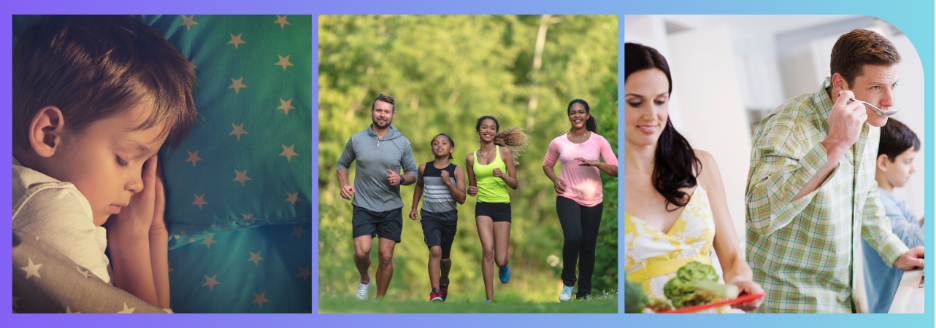
- Sleep: Protect your own rest as fiercely as you do your child’s. Consistent bedtimes benefit the whole household.
- Move together: A bike ride, a backyard soccer game, or an after-dinner walk works wonders for mood and energy.
- Eat together: Shared meals aren’t just about nutrition—they also strengthen family bonds and communication.
Families who practice these three pillars together show stronger health outcomes than those who focus on only one.
Stress relief that fits real life
Self-care routines that strengthen families don’t need to take hours. Even a few mindful minutes matter. A 2025 study found that short mindfulness practices significantly reduced stress and improved sleep quality. Try three deep breaths before meals, or a five-minute meditation with your kids at bedtime.
If you’re stretched thin, our article on stress relief tips for overwhelmed parents offers quick, practical ideas.
Parents are the role models
Here’s the kicker: children mirror what they see. A 2025 review confirmed that kids’ habits around sleep, diet, and even screen time closely follow their parents’ behaviors. When you take care of yourself, you give your child both permission and a blueprint to do the same.
That’s true for tech use too. Want to raise digitally balanced kids? Start with your own habits. Our piece on building healthy tech habits for tweens shows how parents set the tone at home.
Start small, stay consistent
Family self-care isn’t about perfection. It’s about small, repeatable habits: family dinners, early bedtimes, evening walks, mindful pauses. The real magic happens when you keep returning to these routines even after busy weeks or setbacks.
At Parent Pathways Academy, we believe that self-care routines that strengthen families are not just about parents feeling better. They’re about building resilience, connection, and lifelong wellbeing for every member of the family.
Frequently Asked Questions
Why is family self-care better than individual self-care?
Because kids copy what they see. Shared routines make healthy habits stick while building connection.
What’s the easiest routine to start with?
Bedtime. A consistent routine improves sleep, mood, and family functioning for everyone.
How can I make time for self-care as a busy parent?
Start with five minutes. A mindful pause, a family walk, or sitting down for a meal together counts.
References
Selman, T., Mactaggart, F., Vasilenko, S., & Fiese, B. (2024). Routines and child development: A systematic review. Journal of Family Theory & Review, 16(1), 37–74. https://doi.org/10.1111/jftr.12549
Silva, D., Santos, R., Santos, I., Martins, P., & Raimundo, A. (2025). The impact of parental behaviors on children’s lifestyle, dietary habits, screen time, sleep patterns, mental health, and BMI: A scoping review. Children, 12(2), 203. https://doi.org/10.3390/children12020203
Wickham, S. R., Amarasekara, N. A., Bartonicek, A., & Conner, T. S. (2020). The big three health behaviors and mental health and wellbeing among young adults: A cross-sectional investigation of sleep, exercise, and diet. Frontiers in Psychology, 11, 579205. https://doi.org/10.3389/fpsyg.2020.579205
Alvarado-García, P. A. A., Soto-Vásquez, M. R., Infantes Gomez, F. M., Guzman Rodriguez, N. M., & Castro-Paniagua, W. G. (2025). Effect of a mindfulness program on stress, anxiety, depression, sleep quality, social support, and life satisfaction: A quasi-experimental study. Frontiers in Psychology, 16, 1508934. https://doi.org/10.3389/fpsyg.2025.1508934