

October, being Bullying Prevention Month, reminds us that every conversation about bullying matters — both offline and online. Yet for many parents, figuring out how to talk about cyberbullying feels overwhelming. We want to protect our kids, but fear can make these conversations tense or avoidant.
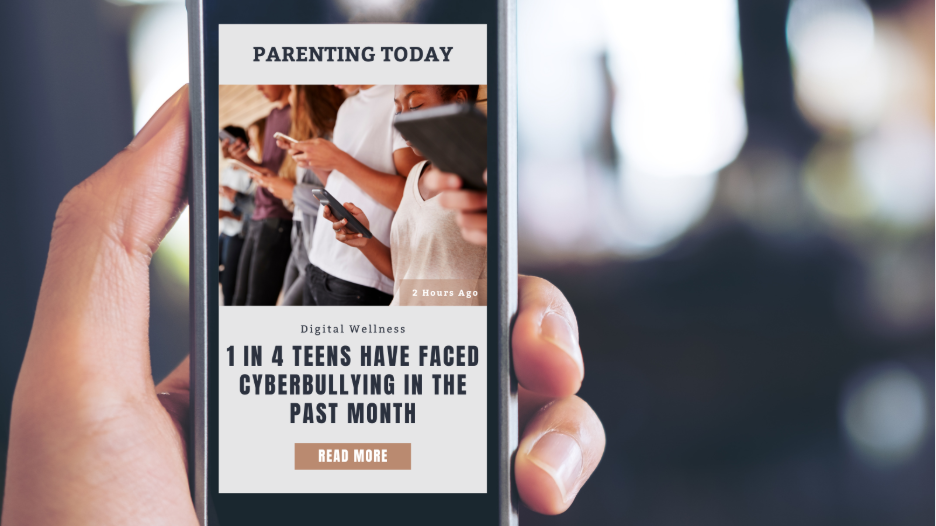
Research shows nearly 1 in 4 teens have faced cyberbullying in the past month, and about 1 in 5 tweens report similar experiences (Patchin & Hinduja, 2024). As devices become part of everyday life, our best defense isn’t restriction, but connection. When kids know they can talk to us without judgment, they’re more likely to share what’s happening online before things get serious.
Why Fear-Based Talks Don’t Work
Well-meaning parents often start with warnings: “Don’t trust anyone online” or “If this happens, I’ll take your phone away.” But studies show that fear-based talks can backfire, making kids hide online problems instead of asking for help (Nemours KidsHealth, 2024).
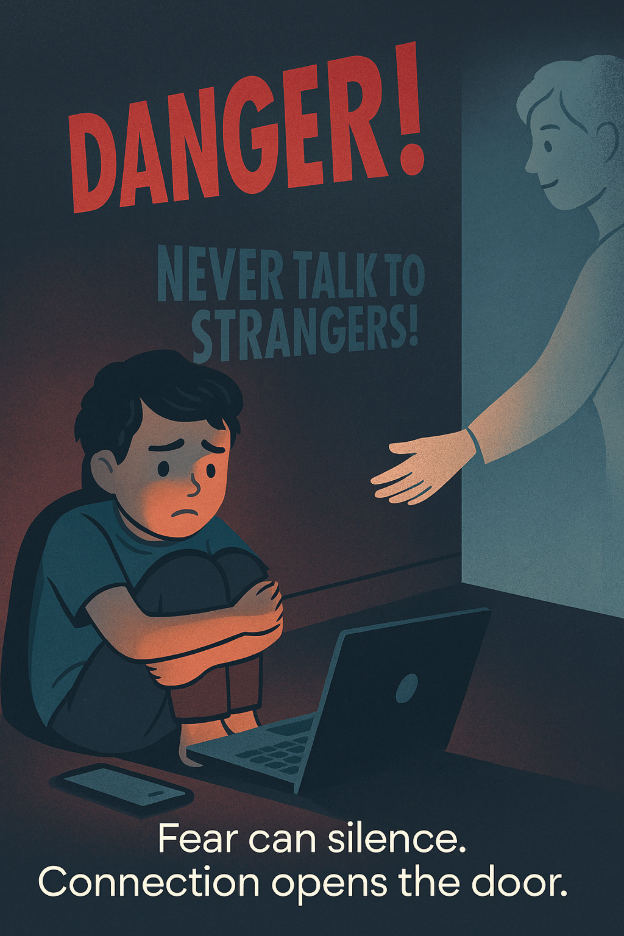
Instead of leading with fear, lead with reassurance:
“If something online makes you uncomfortable, tell me. You’re not in trouble, and we’ll figure it out together.”
Children listen best when they feel safe. The goal isn’t to eliminate risk — it’s to build resilience.
Focus on Connection, Not Control
Trust starts long before a problem happens. Make digital check-ins a normal part of conversation. Ask what games, videos, or group chats your child enjoys. Listen more than you lecture. When you do share advice, focus on skills rather than restrictions — like showing how to block, report, or screenshot harmful content.
Research on digital parenting confirms that strong communication between parents and children directly reduces risky online behavior (Cannoni et al., 2020). It’s not about spying or scolding; it’s about staying curious and involved.
Keep the Conversation Simple and Real
Cyberbullying can sound abstract, so use real-world examples: hurtful comments, group-chat exclusion, or photos shared without consent. Remind your child that online actions have real feelings attached. A quick empathy question helps:

“How do you think that person felt when they read that comment?”
These small talks build emotional awareness — one of the strongest protectors against bullying behavior (StopBullying.gov, 2024).
Teach Digital Resilience
Even with open communication, kids will face online negativity. What matters most is how they respond and recover. Digital resilience — the ability to bounce back from online challenges — is key. A recent study found that children who practice recovery and self-regulation online show stronger confidence and wellbeing (Shen et al., 2024).
You can nurture this by:
- Co-using devices — explore favorite apps together.
- Discussing real scenarios — “What would you do if a friend was being teased?”
- Encouraging breaks — teach that stepping away from a screen is a healthy choice.
When parents frame mistakes as learning moments, children grow more confident navigating digital spaces.
If Your Child Confides in You
When your child tells you about cyberbullying, the first reaction matters most. Stay calm. Thank them for trusting you. Then ask:
“What kind of help do you want right now — do you want to talk, report it, or just have me listen?”
Document the issue with screenshots and, if needed, involve school staff. Experts recommend blocking the bully and reporting the behavior rather than responding emotionally online (Child Mind Institute, 2024). If your child shows signs of distress or withdrawal, reach out to a counselor or pediatrician for support.
Set Shared Family Agreements
Before problems arise, create simple family guidelines for technology use. Agree on screen-free zones, daily time limits, and how to respond if someone is unkind online. When kids help make the rules, they’re more likely to follow them (StopBullying.gov, 2024).
Model the same respect you expect — avoid sharing others’ photos without permission, and talk openly about your own screen habits. Children learn more from what we do than what we say.
End With Encouragement
Talking about cyberbullying without fear is one of the most powerful ways to keep kids safe — and confident. During Bullying Prevention Month, let’s remember that awareness is only the beginning. What truly protects children is knowing they have adults who will listen, believe them, and guide them through tough moments with patience and love.
Parent Pathways Academy helps families build that trust through evidence-based resources in our Digital Wellness Pathway. Explore related guides like Screen Time Rules by Age: What Parents Should Know and Healthy Tech Habits Tweens Can Stick To, or visit our free parenting articles and guides for supportive tools that keep families connected — online and off.
Frequently Asked Questions
Q1: What if my child doesn’t want to talk about cyberbullying?
Start by asking what their friends see online. Keeping the focus off them can make it easier to open up later.
Q2: Should I remove my child’s device if they’re bullied?
Not right away. Removing access can feel like punishment. First, offer comfort, then decide together on next steps.
References
Cannoni, E., Scalisi, T. G., & Giangrande, A. (2020). Digital parenting: Raising and protecting children in a media world. In Parenting: Empirical advances and intervention resources (pp. 123–145). Springer.
Child Mind Institute. (2024). How to help kids deal with cyberbullying.
https://childmind.org/article/how-to-help-kids-deal-with-cyberbullying/
Nemours KidsHealth. (2024). How to prevent cyberbullying (for parents).
https://kidshealth.org/en/parents/cyberbullying.html
Patchin, J. W., & Hinduja, S. (2024). 2023 Cyberbullying data. Cyberbullying Research Center.
https://cyberbullying.org/2023-cyberbullying-data
Shen, Y., Feng, H., & Li, X. (2024). Digital resilience among individuals in school education settings: A concept analysis based on a scoping review. BMC Nursing, 23(1), 466. https://doi.org/10.1186/s12912-024-01686-1
StopBullying.gov. (2024). Establishing rules and prevention strategies. U.S. Department of Health and Human Services.
https://www.stopbullying.gov/prevention/establishing-rules