
STEM learning for parents doesn’t need to feel complicated. In fact, some of the best STEM moments happen during everyday activities – right at home. Whether you’re helping your child explore how things work or encouraging hands-on curiosity, these easy ideas can make STEM part of your family’s routine.
Research shows that even simple, early exposure to STEM at home can lead to long-term growth in math and problem-solving skills (Morgan et al., 2020).

What Is STEM and Why Does It Matter at Home?
STEM stands for Science, Technology, Engineering, and Math – four essential skills that help kids think critically, solve problems, and understand the world around them. But you don’t need a lab or fancy gadgets to explore STEM. Everyday routines can spark curiosity and build your child’s confidence. Let’s look at some practical examples:
1. Turn Cooking into a Science Lab
- Measure ingredients to explore fractions and volume
- Watch boiling water and talk about states of matter
- Combine baking soda and vinegar to observe reactions
Try This: Let your child predict what will happen when ingredients mix. Write or draw their guesses.
Reflect: What part of cooking made your child curious?
Age idea:
- Ages 4–6: Count scoops and observe bubbling
- Ages 7–12: Measure, mix, and track changes
2. Build with Everyday Items
- Use blocks, boxes, or recyclables to build towers
- Create paper bridges and test weight limits
- Add a timer to turn it into a mini engineering challenge
Try This: Ask your child to redesign their creation after it wobbles or collapses.
Reflect: How did your child solve a problem while building?
Age idea:
- Ages 4–6: Stack and balance shapes
- Ages 7–12: Design multi-step builds and test solutions
3. Explore Nature Like a Scientist
- Collect and sort leaves, rocks, or sticks
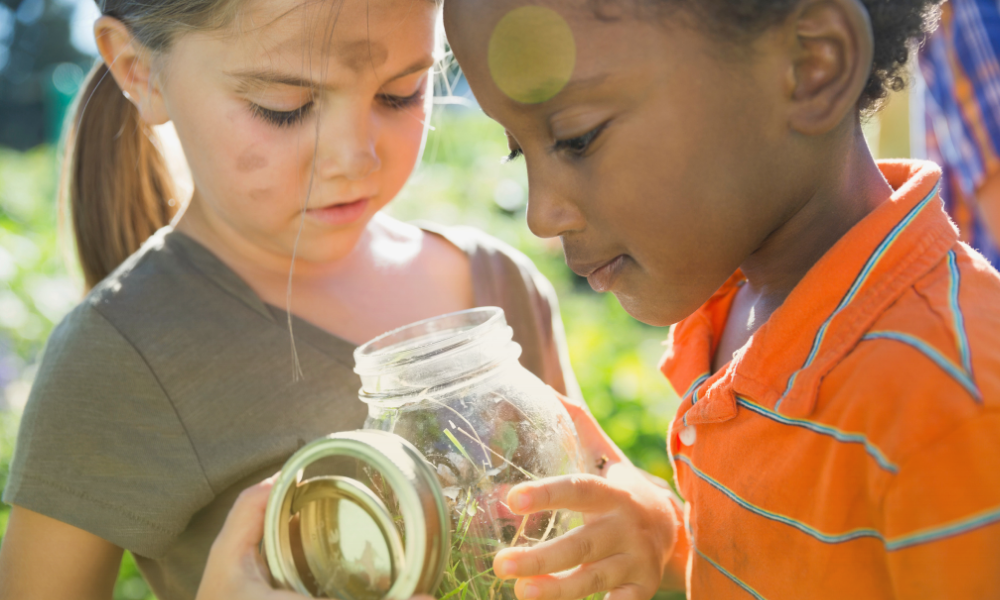
- Use a magnifying glass to examine bugs, bark, or soil
- Ask questions like, “Why do you think that happened?”
Try This: Keep a nature notebook with drawings and one fun fact each week.
Reflect: What patterns or surprises did your child notice outside?
Age idea:
- Ages 4–6: Sort and name simple features
- Ages 7–12: Record and compare observations
4. Make Math Part of the Day
- Count snacks or laundry items together
- Use coins or toys to add and subtract visually
- Measure furniture with tape to compare sizes
Try This: Turn cleanup into a math game: “Can you find 3 round things and 2 blue ones?”
Reflect: When did your child use math without realizing it?
Age idea:
- Ages 4–6: Match numbers and quantities
- Ages 7–12: Use measurement and estimation
5. Use Storytime for STEM Talk
- Choose books with problems to solve or inventions
- Pause to ask: “What could they try next?”
- Draw new designs inspired by the story
Try This: Ask your child to invent a gadget the character could use next time.
Reflect: What creative ideas came up during your conversation?
Age idea:
- Ages 4–6: Talk about sequence and action
- Ages 7–12: Explore alternative endings and new inventions
Frequently Asked Questions
Q: What if I’m not confident in science or math?
A: You don’t need to be a STEM expert. Your role is to encourage curiosity and learn alongside your child.
Q: How much time does this take?
A: Even 5–10 minutes a day can spark learning. Focus on small, consistent moments.
Q: What’s the best age to start?
A: Start now! Preschoolers and preteens alike benefit from hands-on, everyday STEM experiences.
Bring STEM Learning into Your Home
STEM learning for parents can be simple, fun, and woven into everyday life. When you treat ordinary routines as learning opportunities, your child builds lasting confidence in science, math, and creative thinking.
Parent Pathways Academy offers guided tools for parents that turn play into learning – whether you’re cooking, building, or exploring outside.
Looking for more confidence-building steps to support your child? Download the PPA app for family check-ins, easy daily tips, and supportive activities for every stage of parenting.
References
Morgan, P. L., Farkas, G., Hillemeier, M. M., & Maczuga, S. (2016). Science achievement gaps begin very early, persist, and are largely explained by modifiable factors. Educational Researcher, 45(1), 18–35. https://eric.ed.gov/?id=ED587150
National Science Teaching Association. (n.d.) Science Resources for Parents. https://www.nsta.org/science-resources-parents