

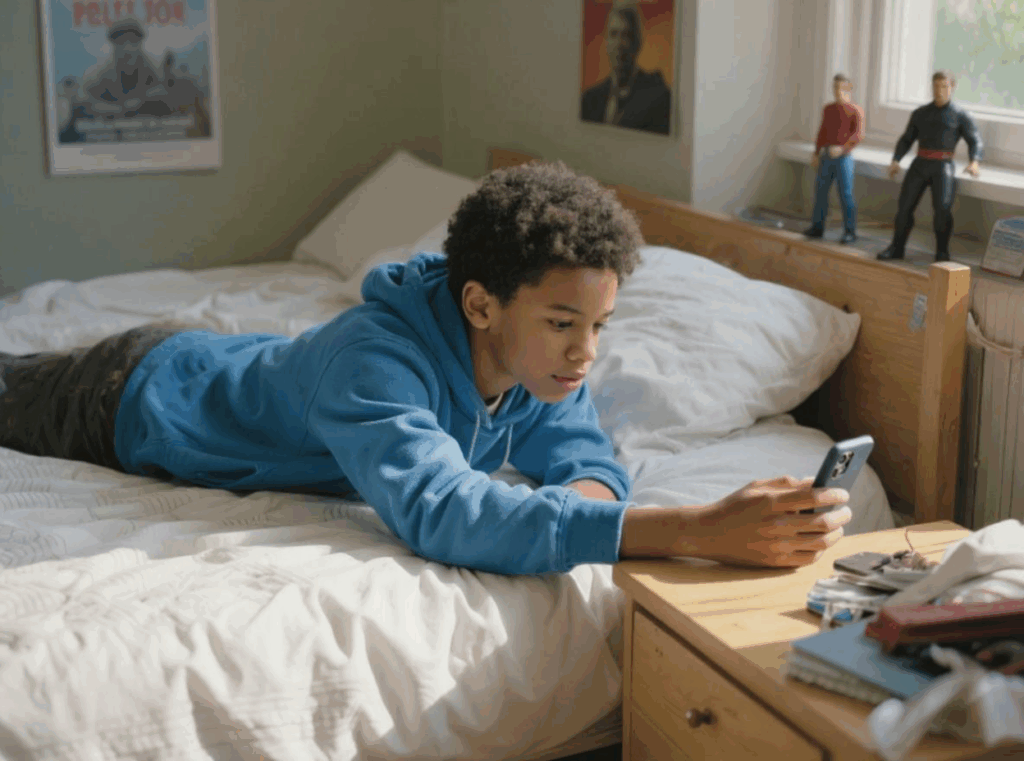
If you’ve wrestled with limiting your tween’s screen time, you’re not alone. But healthy tech habits for tweens aren’t about bans or constant battles. They’re about teaching balance so kids learn how to use technology in ways that support their growth instead of overwhelming it.
Why healthy tech habits for tweens matter
Tweens are at a turning point: they’re gaining independence but still need guidance.
According to the American Psychological Association, this is when kids’ brains become especially tuned to social feedback—likes, comments, and peer approval light up their reward centers more than at any other age (American Psychological Association, 2022).
At the Verizon Digital Wellness Summit, experts shared that tweens check their devices an estimated 150–200 times a day—a clear sign that tech isn’t just a tool; it’s part of their social world (Verizon, 2024). Without guidance, that level of connection can lead to poor sleep, anxiety, and stress.
Try This: Create one tech-free hour each evening for family time, homework, or offline hobbies.
Reflect: What would change in your home if screens were off for just one hour a day?
What experts are saying: The push for balance
Jonathan Haidt, author of The Anxious Generation, has become one of the strongest voices for delaying smartphones and social media until kids are ready. He argues that “every year you delay the smartphone, you protect a year of your child’s mental health” (Haidt, 2024).
Meanwhile, Oxford researchers introduced the “digital Goldilocks hypothesis,” which suggests the healthiest screen time is neither extreme restriction nor unlimited access—it’s a middle ground that prioritizes quality and purpose over sheer hours (Big Think, 2024).
If you’re looking for practical ways to put this balance into action, explore our guide on creating digital balance for the whole family.
1. Set simple, clear boundaries
Tweens thrive with clear expectations. Instead of broad “no screens” rules, create focused limits like:
- No devices at the dinner table.
- All screens off one hour before bed.
- Weekend “tech check-ins” where you review apps together.
For younger tweens (10–12), visual charts can help reinforce rules. For older tweens (13–14), involve them in making the rules—it builds buy-in and reduces arguments.
Learn more about age-specific screen time rules for kids to set limits that work for your family.
Try This: Draft a “Family Tech Agreement” together and post it on the fridge.
Reflect: How can you give your tween a voice in setting tech rules while keeping healthy limits?
2. Offer offline alternatives that stick
If screens are the only option, they’ll always win. But research from the Digital Wellness Lab shows that structured offline routines—like sports, music, or family activities—help reduce daily screen time by nearly 25% (Digital Wellness Lab, 2024).
Try This: Create a “boredom box” filled with games, books, or craft supplies for screen-free time.
Reflect: What’s one activity your tween already loves that you could make more accessible?
3. Model the habits you want to see
Tweens notice everything, especially your screen use. At the Verizon summit, experts emphasized that parents who model healthy tech boundaries—like putting devices away during meals—have kids who are more likely to follow suit (Verizon, 2024).
Try This: Start a family “no-phone dinner” challenge and celebrate wins with a fun family reward.
Reflect: What small tech habit could you change to set the tone for your home?
4. Build digital agency, not just rules
Instead of only restricting screens, teach tweens how to navigate them. Harvard experts recommend showing kids how to adjust privacy settings, block harmful content, and talk through online interactions so they learn self-control (Harvard GSE, 2022).
Check out our guide on teaching digital safety with confidence to help your child build these skills.
Try This: Ask your tween to teach you something about a favorite app—then discuss what feels safe or not.
Reflect: How often do you talk to your tween about their online world instead of only monitoring it?
Frequently Asked Questions
Q: How much screen time is healthy for tweens?
The American Academy of Pediatrics suggests family media plans that prioritize sleep, schoolwork, and offline activities, not rigid time limits.
Q: Should I monitor my tween’s online activity?
Yes, but combine it with conversation. Monitoring keeps them safe, but open dialogue builds trust and helps them learn responsible habits.
The bottom line
Building healthy tech habits for tweens is less about control and more about coaching. By setting clear limits, offering offline alternatives, modeling balance, and empowering your tween, you’re giving them tools for life—not just rules for today.
For more ways to reduce tech-related tension, read our guide on stress relief tips for parents and kids.
Parent Pathways Academy is here to help you turn these small steps into lasting change. Explore our free parenting resources for expert-backed guides, simple routines, and community support.
References
American Psychological Association. (2022). Social media and children’s mental health: What the research says. APA. https://www.apa.org/news/apa/2022/social-media-children-teens
Big Think. (2024). The Goldilocks hypothesis of screen time. Big Think. https://bigthink.com/the-present/the-goldilocks-hypothesis/
Digital Wellness Lab. (2024). Family digital wellness guide. Boston Children’s Hospital. https://digitalwellnesslab.org/family-digital-wellness-guide/
Harvard Graduate School of Education. (2022). Helping tweens navigate the digital world. Harvard GSE. https://www.gse.harvard.edu/ideas/usable-knowledge/22/08/teens-digital-world
Haidt, J. (2024). Jonathan Haidt wants to help kids break up with their phones. Parents. https://www.parents.com/next-gen-winner-jonathan-haidt-11774151
Verizon. (2024). Verizon Digital Wellness Summit: Helping kids unplug. Verizon. https://www.verizon.com/about/parenting/verizon-digital-wellness-summit-helping-kids-unplug